Pasta is one of the easiest foods to love. It’s comforting, versatile, quick to cook and enjoyed by both adults and children.
But if you’re trying to make better food choices, you may have come across a newer option: red lentil pasta.
So, is red lentil pasta actually healthy?
The answer depends on the ingredients and nutrition of the particular product you choose. But compared with many conventional pasta options, pasta made primarily from red lentils can offer some nutritional advantages, particularly when it provides more protein and fibre.
Let’s take a closer look.
What is red lentil pasta?
Red lentil pasta is pasta made using red lentils or red lentil flour instead of relying primarily on traditional wheat ingredients.
It is shaped just like conventional pasta—fusilli, penne, macaroni and other familiar shapes—but the main ingredient is different.
This is what makes red lentil pasta interesting.
You can enjoy the pasta experience you already know while incorporating lentils into the meal in a completely different way.
Is red lentil pasta healthy?
Red lentils are naturally a source of plant-based protein and dietary fibre, among other nutrients.
However, the nutritional value of red lentil pasta depends on the actual recipe and serving size.
When choosing a red lentil pasta, check:
- The ingredient list
- Protein per serving
- Dietary fibre per serving
- Total carbohydrates
- Serving size
- Added ingredients
A pasta made with a high proportion of red lentils will generally be quite different nutritionally from a product that simply adds a small amount of lentil flour to another primary ingredient.
1. Red lentil pasta can provide more protein
One reason people choose red lentil pasta is its protein content.
Protein is an important part of a balanced diet, and incorporating more plant-based protein sources can be useful for many people.
For comparison, always look at the nutrition panel on the specific product rather than assuming that every red lentil pasta has the same amount of protein.
2. It can be a good source of dietary fibre
Red lentils naturally contain dietary fibre.
Fibre is an important part of a balanced diet and is found naturally in foods such as pulses, whole grains, fruits and vegetables.
If you’re comparing two pasta products, checking their fibre content can therefore be useful.
Don’t just look at the words “healthy” or “high fibre” on the front of the package.
Turn the packet around.
The nutrition panel tells you much more.
3. Red lentil pasta can be made without maida
Many consumers specifically search for pasta without maida.
Red lentil pasta can provide an alternative when it is made primarily from red lentil flour rather than refined wheat flour.
But remember: “without maida” does not automatically mean “healthy.”
The complete ingredient list still matters.
Look at what has actually been used to make the product.
4. Does red lentil pasta taste like lentils?
This is probably the question people ask before trying it.
And it’s an important one.
Because healthy food only becomes part of everyday life when people actually enjoy eating it.
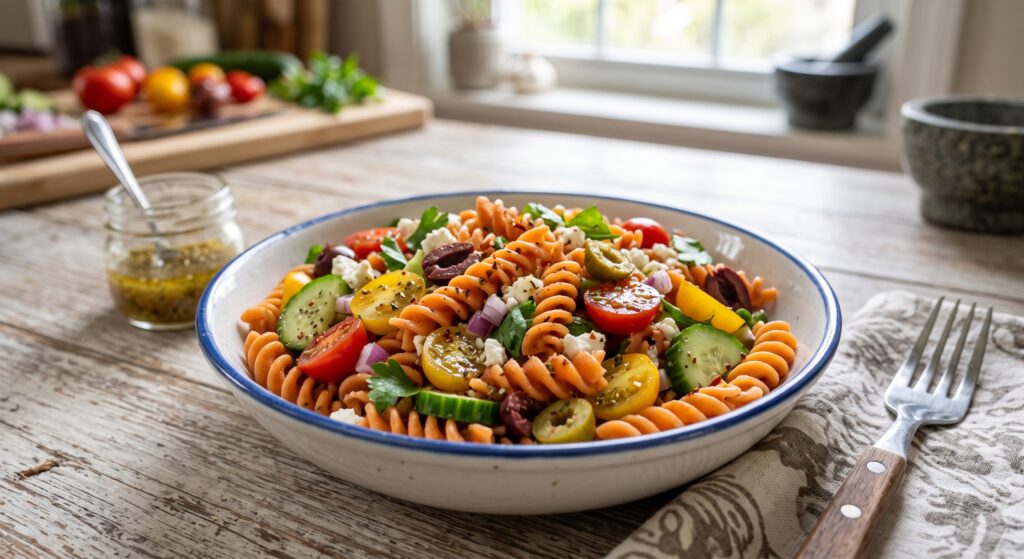
At PanjabFresh, our goal with Red Lentil Fusilli was to create pasta that feels like pasta—not a bowl of lentils disguised as pasta.
Our Red Lentil Fusilli is made with more than 90% red lentil flour, while retaining the familiar shape and versatility of pasta.
Pair it with tomato sauce, pesto, vegetables, cheese or your favourite pasta sauce.
The idea is simple:
Better ingredients shouldn’t mean giving up the food you love.
5. Is red lentil pasta good for kids?
Red lentil pasta can be an interesting option for families because it looks and cooks like familiar pasta while using a different primary ingredient.
For children, however, taste matters.
A nutritious meal that a child refuses to eat isn’t particularly useful for everyday family life.
That’s why many parents prefer to introduce alternative ingredients through foods their children already enjoy.
For younger children, always consider age-appropriate portions, preparation and texture.
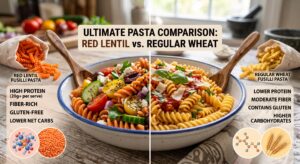
How does red lentil pasta compare with regular pasta?
There isn’t one universal answer because products vary.
The easiest way to compare them is to look at:
Protein → Fibre → Ingredients → Calories → Serving size
For a detailed comparison, read our guide:
Red Lentil Pasta vs Regular Pasta: What’s the Difference?
What should you look for when buying red lentil pasta?
Before buying, check these five things:
1. The main ingredient
Is red lentil flour actually the primary ingredient?
2. Protein
Compare protein per serving with the other pasta products you’re considering.
3. Fibre
Look at the dietary fibre listed on the nutrition panel.
4. Ingredient list
Fewer, recognizable ingredients can make it easier to understand what you’re eating.
5. Taste
Because food is meant to be enjoyed.
So, is red lentil pasta healthy?
Red lentil pasta can be a nutritious alternative to conventional pasta, particularly when it is made primarily from red lentils and provides meaningful amounts of protein and fibre.
But don’t choose a product simply because the package says “healthy.”
Read the ingredients.
Read the nutrition panel.
And most importantly, choose food that you and your family will actually enjoy eating.
At PanjabFresh, that’s exactly what we’re trying to create.
Better ingredients. Deliciously made.
Explore our Red Lentil Fusilli and discover a different way to enjoy pasta.